Rechargeable Lithium Electric Screwdriver vs. Corded Screwdriver: Which Is Better for Your Work?
Choosing between a rechargeable lithium electric screwdriver and a corded screwdriver depends on your working environment, fastening requirements, and need for mobility. Both types can simplify screw fastening compared with manual tools, but they differ in power supply, portability, operating convenience, and maintenance requirements.
For DIY enthusiasts, furniture installers, maintenance workers, and professional tool buyers, understanding these differences makes it easier to select the right fastening tool. Cordless models offer greater freedom of movement, while corded tools provide a continuous connection to an electrical supply without relying on a rechargeable battery.
Power Supply and Working Flexibility
The main difference between rechargeable lithium electric screwdrivers and corded screwdrivers is their power source.
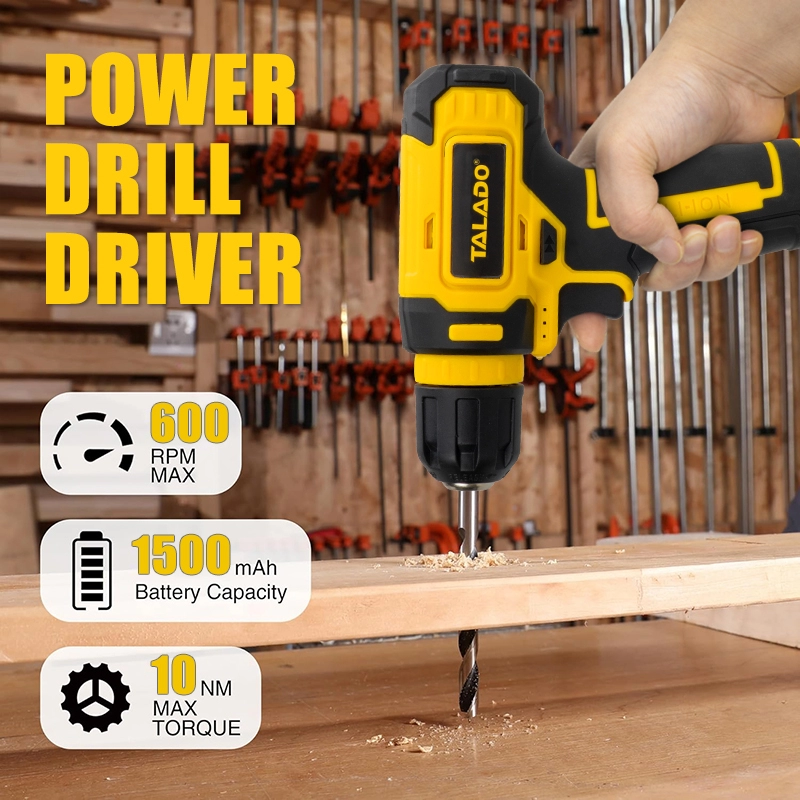
A rechargeable lithium electric screwdriver uses a lithium-ion battery to operate without a direct connection to a wall outlet. This design is particularly useful when working outdoors, moving between workstations, assembling furniture, or completing repairs in locations where electrical outlets are inconvenient.
A corded screwdriver draws power from an external electrical supply. As long as the supply is available and the tool is used within its operating limits, there is no need to stop for battery recharging. However, the power cord can restrict movement and may require an extension cable for work across larger areas.
For users who frequently change work locations, a cordless fastening tool can provide a more convenient solution.
Portability and Ease of Handling
Portability is another important consideration when choosing an electric screwdriver.
Rechargeable lithium models are generally easier to transport between different work areas because they do not require a power cable during operation. They are convenient for furniture assembly, cabinet installation, equipment maintenance, and other tasks that involve frequent repositioning.
Corded screwdrivers are more suitable for fixed workstations where a reliable power outlet is readily available. Their cables may be less of a concern when the tool is used primarily at a workbench.
When comparing cordless tools, users should also consider battery weight, grip design, tool balance, and overall dimensions. A well-balanced tool can make repeated fastening tasks more comfortable, particularly during extended work sessions.
Runtime and Work Efficiency
Rechargeable and corded screwdrivers support different working patterns.
A cordless tool operates within the available battery capacity and may need recharging or a battery replacement during extended use. Actual runtime depends on battery capacity, fastening resistance, operating speed, and frequency of use. Keeping a compatible spare battery available can help reduce interruptions in demanding work environments.
A corded screwdriver does not require battery recharging, making it a practical option for continuous operation at a fixed workstation. However, users must manage the cable and maintain access to a suitable power source.
For mobile installation teams and construction workers, cordless tools can improve workflow flexibility. For repetitive fastening tasks at a stationary assembly bench, a corded model may remain a practical choice.
Torque and Fastening Performance
Power supply alone does not determine how much fastening force a tool can deliver. Motor design, gearing, torque settings, and the tool's operating mechanism also influence performance.
Rechargeable lithium electric screwdrivers are available in a wide range of designs, from compact tools for light-duty assembly to high-torque cordless impact drivers for demanding fastening applications.
Corded screwdrivers also vary considerably in output and intended use. Some are designed for precision assembly, while others are built for more demanding industrial tasks.
Before purchasing a tool, consider the fastener size, material hardness, required torque, and frequency of use. For delicate work, controlled torque is important to prevent stripped screw heads or damaged components. For driving long screws and handling more demanding fastening tasks, a suitable impact driver may be more appropriate than a conventional electric screwdriver.
Battery Maintenance and Long-Term Costs
Rechargeable lithium tools require appropriate battery care. Users should follow the manufacturer's charging instructions, avoid unsuitable charging equipment, keep the battery away from excessive heat, and store the tool under recommended conditions.
Battery capacity and condition may change over time, and replacement costs should be considered when evaluating long-term ownership expenses.
Corded screwdrivers do not require rechargeable battery maintenance, although their power cables, plugs, motors, and other components still need routine inspection. A damaged cable should never be used.
The overall cost of either tool depends on its purchase price, accessories, maintenance requirements, expected service life, and frequency of use. Choosing a tool based on the actual workload is generally more useful than comparing the power supply alone.
Which Screwdriver Is Better for Different Applications?
The right choice depends on where and how the tool will be used.
A rechargeable lithium electric screwdriver is often a practical option for furniture assembly, household repairs, mobile installation work, and projects that require frequent movement. It is particularly convenient when access to electrical outlets is limited.
A corded screwdriver can be a good fit for repetitive assembly at a fixed workstation, especially when uninterrupted access to a suitable power supply is available.
For professional fastening involving long screws, heavier materials, or higher torque requirements, buyers should also consider a cordless impact driver. Its impact mechanism is designed to support fastening applications that may exceed the capabilities of a conventional electric screwdriver.
Consider a 21V Brushless Cordless Impact Driver for Demanding Fastening Tasks
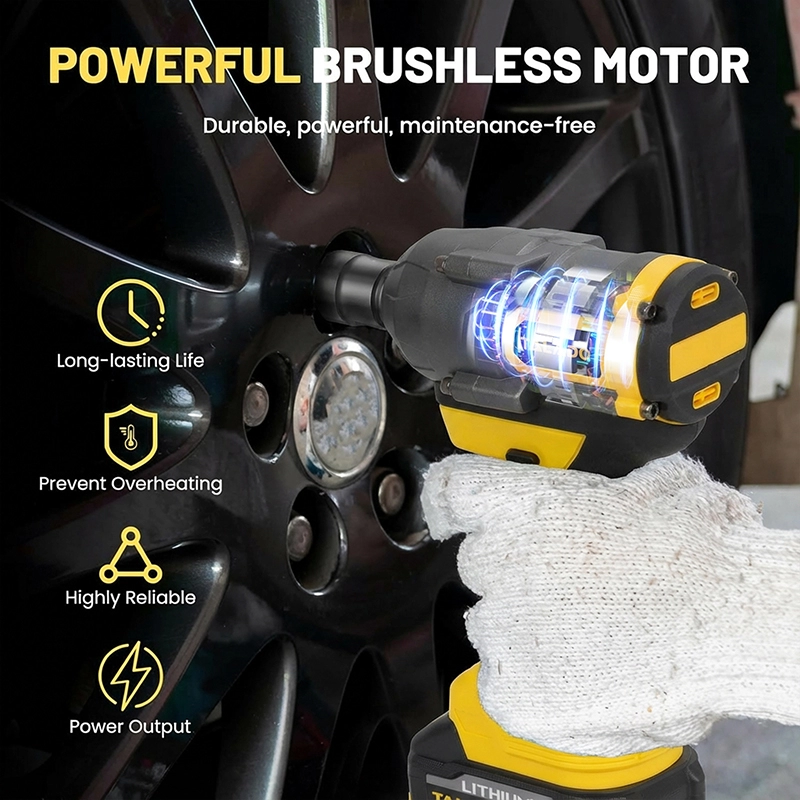
For users who need more fastening capability than a basic electric screwdriver can provide, the TALADO 21V Brushless Cordless Impact Driver is worth considering.
Designed for fastening and assembly applications, this model combines a brushless motor with a rechargeable lithium battery system. Its key specifications include:
Rated voltage: 21V
Maximum torque: 280 N·m
No-load speed: 0–1600 / 2200 RPM
Impact frequency: 0–1600 / 2200 BPM
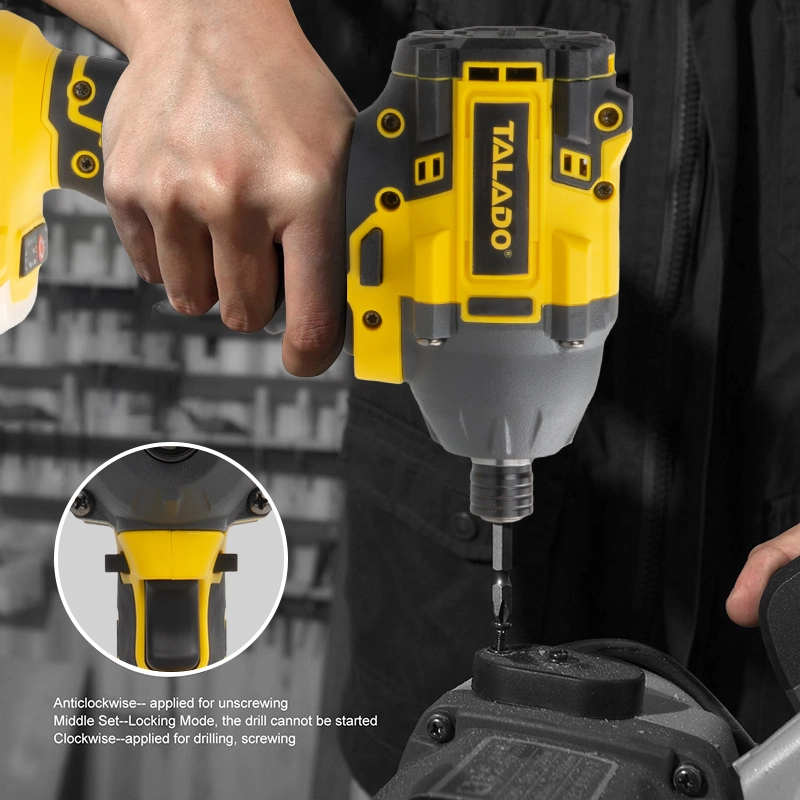
Chuck type: 6.35 mm quick-change hex chuck
Net weight: Approximately 1.1 kg
The tool is intended for applications such as furniture assembly, cabinet fitting, wood and metal installation, and general construction fastening. Its quick-change hex chuck supports compatible screwdriver bits, while its dual-speed settings help users adapt operation to different fastening requirements.
As an impact driver rather than a conventional electric screwdriver, it is particularly relevant for users who prioritize cordless mobility and higher-torque fastening capability. The appropriate tool should always be selected according to the fastener, material, and manufacturer's application guidance.
For distributors, importers, and power tool brands, the product is also available for OEM and ODM cooperation, including customization options for branding, housing color, and packaging.
How to Choose the Right Tool for Your Needs
Before making a purchasing decision, evaluate your typical work environment, required fastening force, operating duration, and budget.
If mobility is your priority, a rechargeable lithium tool can reduce dependence on electrical outlets and simplify work across multiple locations. If your tasks take place at a fixed workstation and require long periods of uninterrupted operation, a corded screwdriver may be more suitable.
For demanding fastening jobs, compare the torque output, impact mechanism, chuck compatibility, battery platform, and speed settings rather than relying on voltage alone. These factors help determine whether a standard electric screwdriver or an impact driver is the better match.