How to Choose the Right Torque for Automotive Fastening Tools?
Choosing the right torque for automotive fastening tools is essential for efficient vehicle maintenance, reliable fastening, and safe workshop operations. Different automotive tasks require different levels of torque, from routine maintenance and wheel removal to heavy-duty truck repair and industrial equipment servicing. Selecting an appropriate cordless impact wrench requires more than simply choosing the model with the highest torque rating.
For automotive repair shops, tool distributors, and professional maintenance teams, understanding torque requirements, drive size, fastening conditions, and tool specifications can help improve work efficiency and ensure the right tool is used for each application.
1. Understand the Torque Requirements of Different Automotive Tasks
Torque requirements vary according to the fastener size, thread condition, vehicle design, and maintenance procedure. A tool suitable for removing ordinary automotive fasteners may not provide the most practical solution for heavy-duty equipment maintenance.
When selecting automotive fastening tools, consider the specific tasks the tool will perform.
Routine automotive maintenance: General repair work may involve a variety of bolts and nuts with different torque requirements. A compact, portable impact wrench can be useful when accessibility and maneuverability are important.
Wheel and tire service: Impact wrenches are commonly used to remove wheel nuts and assist with wheel service. Final wheel nut tightening should follow the vehicle manufacturer's specified torque using a suitable calibrated torque wrench.
Suspension and chassis maintenance: Some fasteners may require greater breakaway torque because of corrosion, thread contamination, or previous tightening conditions. The appropriate tool should be selected according to the actual service requirements.
Heavy truck and machinery repair: Larger fasteners and demanding maintenance conditions may require high-torque impact wrenches with compatible drive sizes and impact-rated sockets.
Identifying the primary application before purchasing a tool helps avoid choosing equipment that is either unsuitable for the task or unnecessarily powerful for routine work.
2. Compare Impact Wrench Torque Ratings Carefully
Maximum torque is an important specification when evaluating automotive fastening tools, but it should not be the only selection criterion. Different manufacturers may measure or report torque under different conditions, and maximum loosening torque may differ from tightening torque.
A higher rating does not automatically mean that a tool is appropriate for every automotive application. Buyers should also consider speed settings, impact performance, tool control, battery capacity, and the fasteners being serviced.
For example, a 350N·m impact wrench may be a practical option for selected general maintenance tasks, while higher-rated models can provide additional capability for more demanding fastening or removal work. The correct choice depends on the application and the manufacturer's verified performance specifications.
3. Match Torque Levels to the Intended Application
Meile offers a range of 21V brushless cordless impact wrenches with different torque ratings and drive sizes. This range gives automotive repair professionals and tool distributors several options when building a product portfolio.
| Torque rating | Example product | Selection considerations |
|---|
| 350N·m | 21V Brushless Cordless Impact Wrench, 1/2-inch square drive | Portability and selected general automotive or construction tasks |
| 600N·m | 21V Brushless Cordless Impact Wrench, 1/2-inch square drive | General automotive maintenance and suitable fastening applications |
| 800N·m | 21V Brushless Cordless Impact Wrench, 1/2-inch square drive | Applications requiring a higher rated torque capacity |
| 1100N·m | 21V Brushless Impact Wrench, 1/2-inch square drive | More demanding fastening and removal tasks, subject to application requirements |
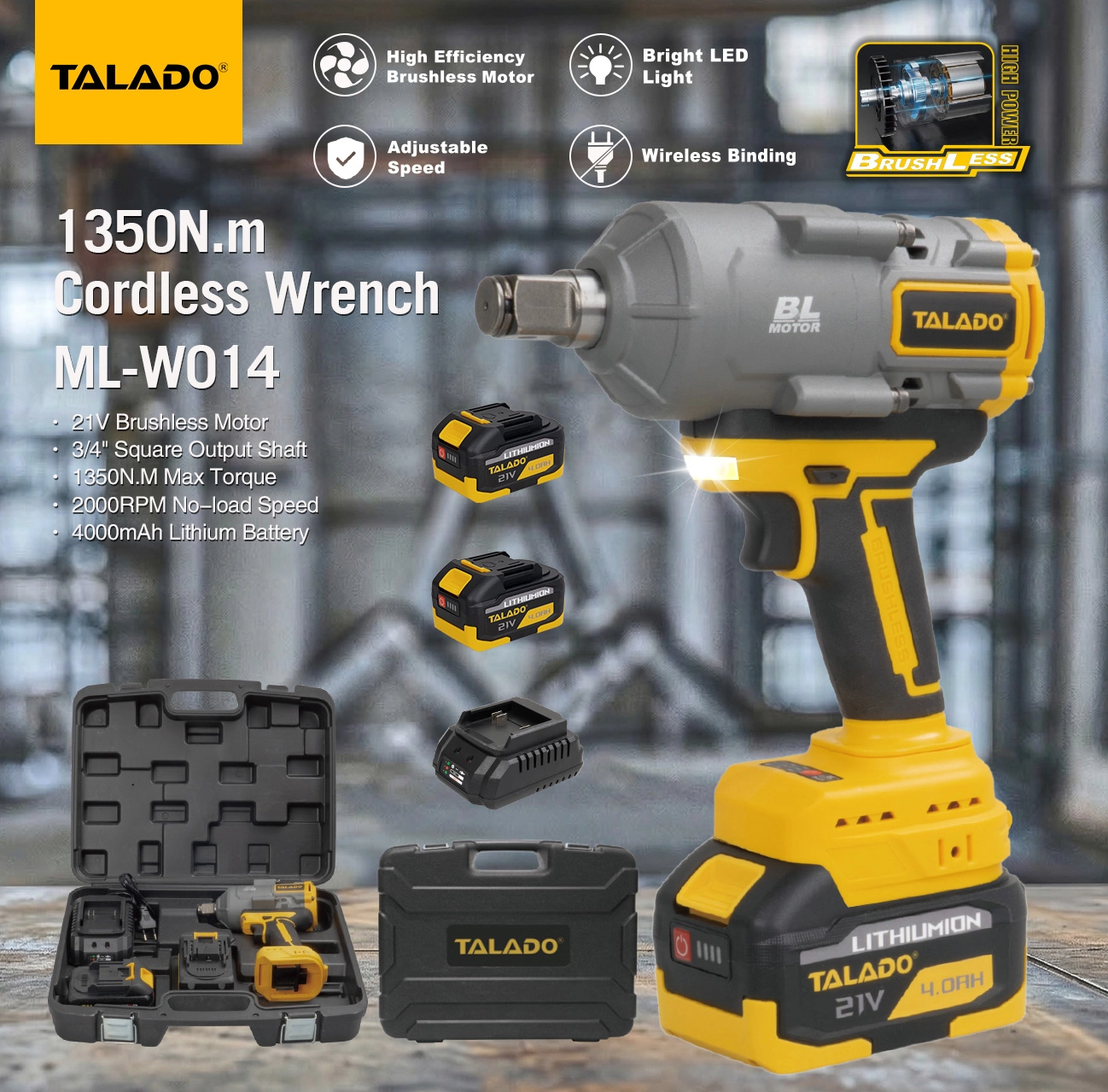
| 1350N·m | 21V Brushless Cordless Impact Wrench, 3/4-inch square drive | Heavy truck and machinery maintenance applications |
| 1500N·m | ML-W018 21V Brushless Cordless Impact Wrench, 3/4-inch square drive | High-torque applications involving truck and railway maintenance |
These ratings provide a starting point for comparing models, not a universal mapping between torque values and specific bolt sizes. Actual suitability depends on verified tightening and loosening performance, fastener specifications, operating conditions, and compatible accessories.
4. Consider Drive Size and Socket Compatibility
Drive size is another important factor when choosing automotive fastening tools. Meile's listed range includes 1/2-inch and 3/4-inch square-drive cordless impact wrenches.
A 1/2-inch drive is commonly used for a wide range of automotive service tasks, offering compatibility with many automotive impact sockets. A 3/4-inch drive is generally associated with larger sockets and more demanding fastening applications, including certain heavy truck and industrial maintenance tasks.
Before selecting a tool, check the following:
Whether the drive size matches the sockets required for the job.
Whether the sockets are rated for impact wrench use.
Whether the tool's dimensions and weight are suitable for the working environment.
Whether the available torque and speed settings match the application.
Whether the battery platform supports the expected working duration.
Matching drive size to the application helps improve tool compatibility and supports more efficient workshop operations.
5. Evaluate Brushless Motor Performance and Battery Requirements
Torque is only one part of cordless impact wrench performance. Motor design and battery characteristics also influence how a tool performs during repeated maintenance tasks.
Meile's 21V brushless cordless impact wrench range is designed for users who need portable fastening equipment for automotive repair and other demanding applications.
When comparing brushless cordless impact wrenches, buyers should evaluate motor efficiency, heat management, battery capacity, charging time, tool weight, and availability of compatible batteries. These factors can affect working convenience and productivity, particularly for technicians who use cordless tools throughout the day.
Battery voltage alone does not determine runtime or working performance. Actual results depend on battery capacity, load, operating settings, and the specific tool design.
6. Avoid Choosing a Tool Based on Maximum Torque Alone
Selecting the highest-torque model may seem like the easiest way to cover a wide range of tasks, but it is not always the most practical approach.
Excessive or poorly controlled torque can damage fasteners, threads, or components. In automotive applications, this can create additional repair work and compromise the reliability of the assembly.
A more effective selection process considers:
The manufacturer's specified torque requirements for the fastener.
Whether the tool will primarily remove fasteners or assist with fastening.
The tool's verified tightening and loosening performance.
Required drive size and socket compatibility.
Speed control and other features that support the intended task.
The need for a calibrated torque wrench for final tightening.
For wheel nuts and other safety-critical fasteners, always follow the relevant vehicle service procedure rather than relying on an impact wrench's maximum torque rating.
7. Choose Automotive Fastening Tools That Fit Your Business Needs
For repair workshops, the priority is finding tools that match daily service requirements while balancing portability, performance, and operating cost. A workshop handling mostly passenger vehicles may prioritize 1/2-inch drive models, while businesses maintaining heavy trucks or industrial machinery may also require 3/4-inch drive options.
For importers, wholesalers, and automotive tool distributors, a product range covering multiple torque levels can help serve customers with different requirements. Meile's 21V brushless cordless impact wrench lineup, ranging from 350N·m to 1500N·m, provides several options to evaluate when developing an automotive fastening tool portfolio.
Before placing a bulk order, buyers should verify the full technical specifications, battery and charger configurations, product quality requirements, packaging options, and applicable compliance documentation. These checks help ensure that the selected models align with the needs of the target market.
Choose the Right Torque for More Efficient Automotive Maintenance
Choosing the right torque for automotive fastening tools starts with understanding the task, the fastener requirements, and the tool's verified performance. Drive size, motor design, battery capacity, and control features should also be considered when comparing cordless impact wrenches.
Meile offers 21V brushless cordless impact wrench options with rated torque values of 350N·m, 600N·m, 800N·m, 1100N·m, 1350N·m, and 1500N·m, including 1/2-inch and 3/4-inch square-drive models for different applications.
Explore the Meile Automotive Fastening Tools range to compare available models and identify suitable options for automotive repair, heavy-duty maintenance, and industrial fastening requirements. For product selection or wholesale inquiries, contact the Meile team to discuss your application and technical requirements.